Choosing your first eFoil: board and battery time
Start with a stable board and a wing suited to your experience. For ride time, check the exact battery and setup: a stated maximum is not a fixed session length.
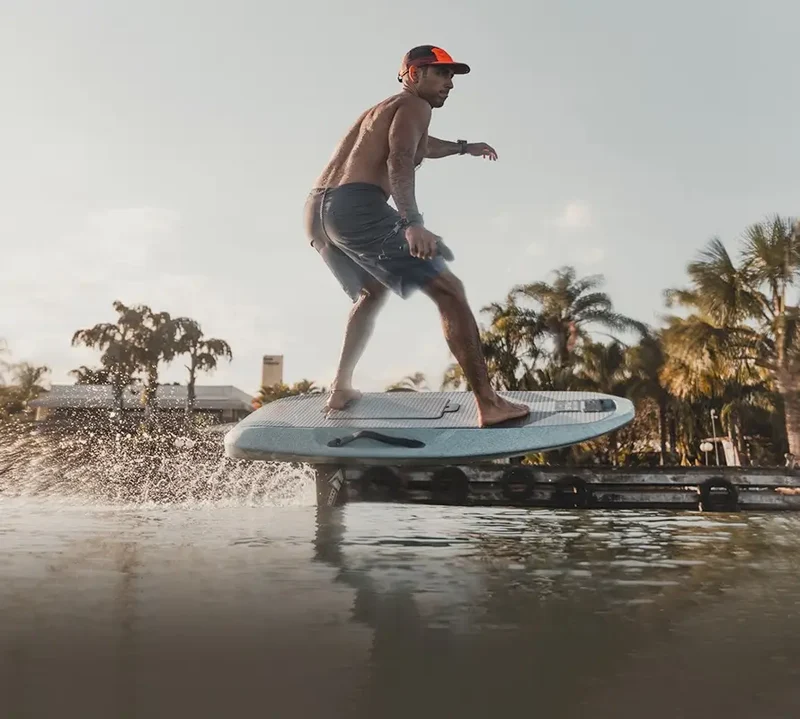
How long can you ride? Two examples: Lift specifies up to 90 minutes for the Gen5 Full Range in the LIFT5 and LIFT5 F. Fliteboard specifies up to 2.5 hours for the Flitecell Explore. These are manufacturer figures for those batteries, not a measured comparison between them. Sources: Lift battery overview and Flitecell Explore.
In this guide:
- Which board helps you get started?
- What does the wing do?
- How should you read a battery figure?
- What should you try before buying?
Which board helps you get started?
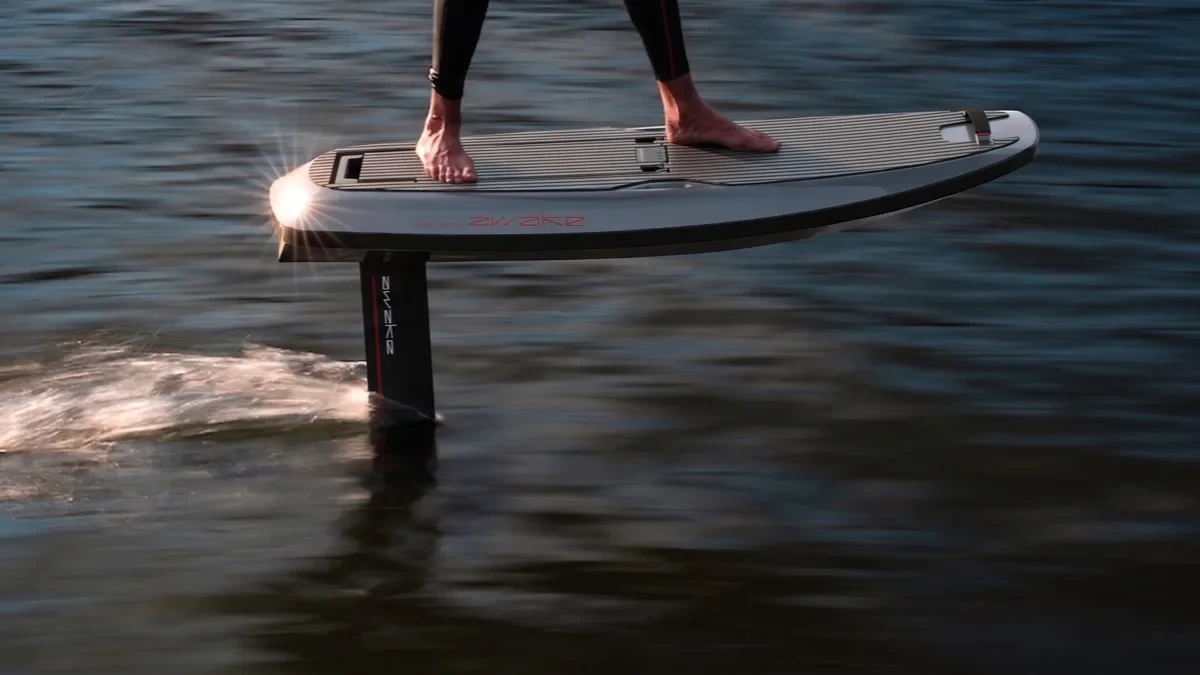
Start with control. Lift describes a larger board as the steadier choice within its range; a smaller board turns more quickly. The manufacturer also offers an inflatable surround called Blowfish, which adds volume while you learn. Source: Lift, eFoils for beginners.
Our advice: try a board you feel comfortable lying and kneeling on before looking at a more compact model. Ask the instructor which version you are using. Write down the board name, wing and battery. You can then look up the same setup later, instead of only remembering that you rode “a Lift” or “a Fliteboard”.
You do not need surfing experience to take a first eFoil lesson. Flying Fish explicitly says experience is not required. Ask your school about its participation requirements and how instruction is provided. Source: Flying Fish FAQ.
What does the wing do?
The wing sits beneath the board. Lift explains the difference this way: larger front wings provide more lift and stability at lower speeds; smaller front wings offer more speed and agility. Your weight, riding style and experience also affect the choice. Source: Lift wing selection guide.
Fliteboard also distinguishes wings for starting out and progressing. It describes its Cruiser range as focused on stability and early lift at lower speeds. Source: Fliteboard wings.
Ask for a beginner wing that fits the rest of the setup. Comparing surface area alone does not answer the whole question. Have the seller explain the combination and try it on the water.
How should you read a battery figure?
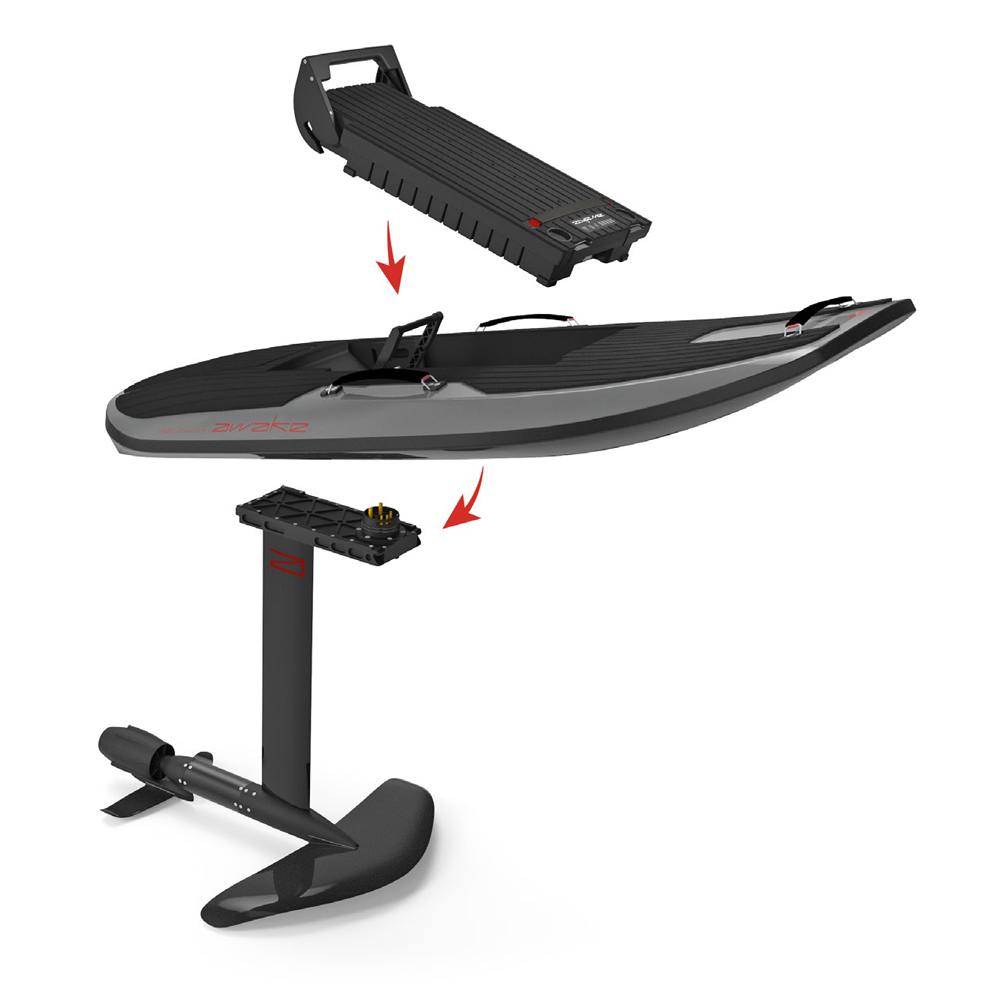
These are two examples of published maxima. Test conditions have not been standardised, so the figures do not establish a winner.
| Battery and application | Manufacturer figure | What to remember |
|---|---|---|
| Lift Gen5 Full Range, LIFT5 / LIFT5 F | Up to 90 minutes | The figure applies to this battery generation. |
| Flitecell Explore | Up to 2.5 hours | Check whether the battery fits the version you choose. |
Sources: Lift battery overview and Flitecell Explore.
Your own ride time depends on factors including weight, speed, wing and propulsion. Fliteboard points riders to a ride-time calculator. It also explains that frequent starts and touchdowns while learning use extra energy. A first practice session therefore differs from continuous, relaxed foiling. Sources: Fliteboard FAQ and battery-time explanation.
At a demo, ask for the battery name and record the starting charge, ending charge and time on the water. Note whether you were mainly practising or already foiling for longer stretches. Treat the session as an indication for your own use, not evidence for every rider.
For used equipment or separate parts, also check the generation. Lift states, for example, that Gen5 batteries do not fit a LIFT4 or LIFT3, and Gen4 batteries do not fit a LIFT5. Source: Lift compatibility reference.
What should you try before buying?
Use your demo to answer these questions:
- Can you start calmly and control the throttle smoothly?
- Which exact board, wing and battery did you try?
- Can you carry the separate parts to the water yourself?
- What ride time does the provider expect for your use, and what is that based on?
- Who will help with maintenance and questions about this version?
Then ask for a complete list of the equipment being offered, including the charger and any extras. Compare a second offer using the same checklist.
Which brand suits you?
Start with a version you feel comfortable using. In comparing Fliteboard, Lift and Waydoo, we put concrete differences side by side. To get on the water first, see where to try eFoiling.
Before riding independently, also read the rules and safety information. Varen doe je Samen recommends lessons and a quiet, suitable location. Choosing a suitable board is one part of preparing. Source: eFoiling tips.
Want to exchange experiences with other riders? Join the community.